Case study: i2i Consortium and Leonard Cheshire


The Issue
The i2i Soft Skills and Digital Skills Programme is a three-year programme to enhance the life skills and employability skills of people with disabilities in Kenya and Bangladesh. Delivered by a consortium led by Leonard Cheshire and funded by the Foreign, Commonwealth and Development Office (FCDO), the programme aims to increase the meaningful inclusion of 11,600 disabled people in paid employment in the private sector in those countries, through skills assessment, skills development, recruitment and support when in work. To be able to upskill that many people, particularly, during a pandemic, it was necessary to bring the soft skills and digital skills training online.

The Challenge
The set of 23 modules needed to be accessible for learners with a wide range of disabilities, particularly those with auditory, visual or Neurodevelopmental Disorders such as autism (ASD), ADHD and dyslexia. It wasn’t acceptable to get it right for 80% of the audience, it needed to be right for everyone and, as such, needed to go well beyond usual accessibility guidelines. Distance, Covid, cultural and language barriers and a limited budget added to the challenge but the result is a learner-centric, engaging programme that goes well beyond accessibility standards, to offer the opportunity to all and to genuinely change lives.


The Solution
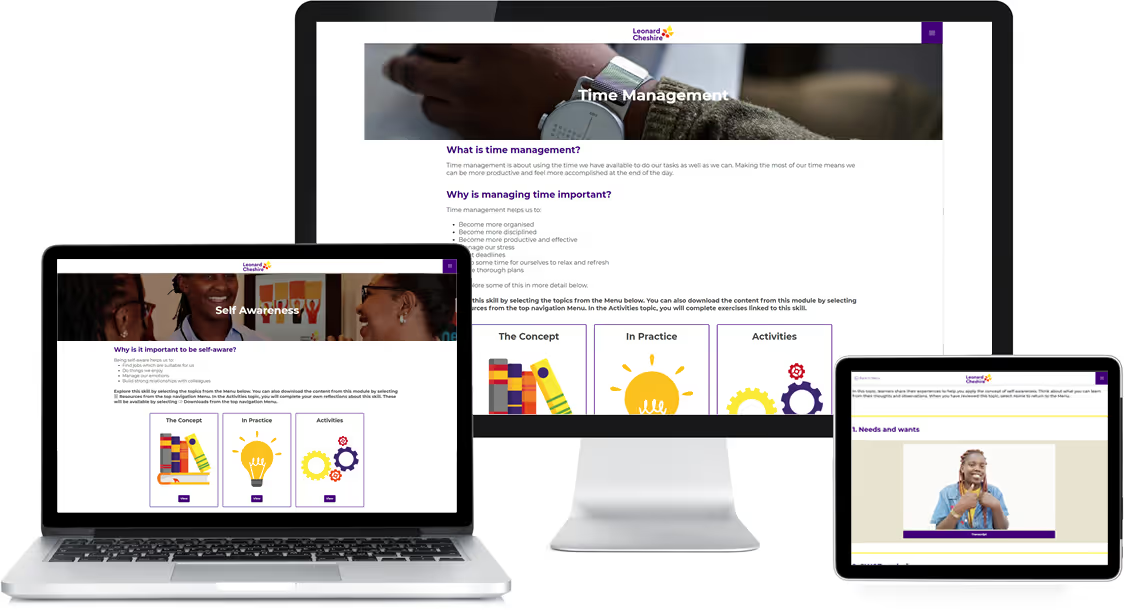
Using a Universal Design for Learning approach, we created a range of learning assets and routes through the modules that cater for the variability of learners needs. Following a consistent flow of Concept – Example – Activity, learners felt safe, knew what to expect and were able to easily navigate the page. This meant that they were able to fully focus on the learning.
The research phase of this project was challenging, with adjustments needed for distance, Covid restrictions, various impairments and language barriers. However, it was the most rewarding and illuminating research phase we have ever done. It gave us a new perspective and enabled us to design a solution which was truly inclusive.
When we conducted the learner research, we found that the learners were keen to see and hear from people like them. People with disabilities are very under-represented in digital learning all over the world but particularly so in the target countries. We asked some of learners to become involved in producing some of the content. We gave them training and guidelines on producing self-shot video and asked them to create videos reflecting on their experiences of using the various tools and techniques covered in the modules. The result was some fantastic, authentic content plus the learners also gained a raft of new skills.
The Results
This project was a real team effort between LAS, Leonard Cheshire, their partners in Bangladesh and Kenya and, most importantly, the learners themselves. It pushed our ways of thinking about accessibility and inclusivity and what we learnt now feeds into all of our projects. There were many challenges, however, together we managed to be flexible, adaptable and patient with each other. The result is something that we’re all really proud of and that is changing lives for the better.

“The elearning content is organised very comprehensively and users can very intuitively locate what they are looking for. The most interesting thing is that the modules have been designed with UDL principles in mind. This means that users have multiple ways of engaging with the content for example. Personally, what I find most exciting about each module is that learners have participated in the development of them making each lesson very approachable and relatable. This is particularly relevant when focusing on learners with disabilities who often don’t see themselves represented in the online content they access”
About Leonard Cheshire
Leonard Cheshire has been supporting disabled people in theUK and around the world for more than 70 years. They work hard to open doors to opportunity and to break down barriers that deny disabled people their basic rights. With over 5,000 staff and 4,000 volunteers, they are one of the UK's largest charities directly reaching more than 98,000 people and organisations through their work.
Want to achieve impact like this?
Get in touch to find out how we can help you with learning and change consultancy, custom digital and blended learning, digital transformation and empowering your L&D team to be the best they can be.
